

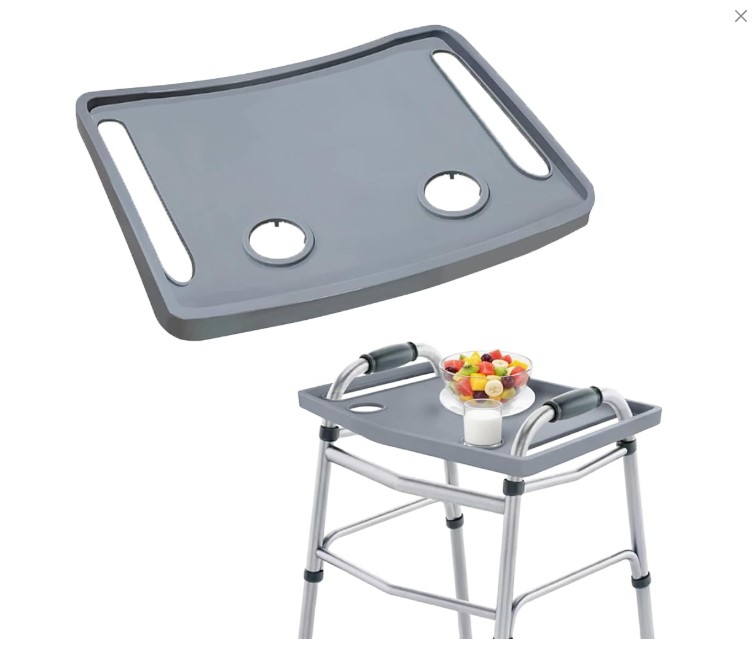
Mobility aids such as walkers provide essential support for seniors and individuals recovering from injuries. While walkers help improve balance and independence, performing daily activities while using one can still present challenges. Simple tasks such as carrying food, drinks, or personal items may become difficult when both hands are needed to maintain stability. This is where a walker tray table becomes a highly practical accessory.
A walker tray table transforms a standard walker into a multifunctional tool that allows users to transport items safely without compromising balance. By providing a stable surface, this accessory enhances convenience, safety, and independence for seniors who rely on walkers for daily mobility.
Understanding the Purpose of Walker Tray Tables
A walker tray table is a removable platform that attaches securely to the top rails of a walker. Its primary function is to create a flat surface that allows users to carry items such as meals, drinks, books, or personal belongings while walking.
Without a tray, individuals may attempt to carry items in one hand while holding the walker with the other. This can disrupt balance and increase the risk of falls. A tray eliminates this risk by allowing users to place items securely while keeping both hands on the walker handles.
Many tray designs include raised edges to prevent items from sliding off during movement.
Benefits for Seniors and Caregivers
A walker tray table offers multiple advantages that improve daily life for both seniors and caregivers. For seniors, the tray provides a level of independence that allows them to perform simple tasks without assistance.
For example, a senior can easily carry a meal from the kitchen to the living room or transport a cup of tea to their favorite chair. This independence helps maintain confidence and encourages mobility within the home.
Caregivers also benefit because the tray reduces the need for assistance with everyday activities.
Key Features to Look For
When choosing a walker tray table, several features should be considered to ensure safety and usability. Durable materials such as lightweight plastic or composite materials are commonly used to create strong yet portable trays.
Raised edges around the tray help keep items secure while walking. Non slip surfaces are also helpful because they prevent plates or cups from sliding during movement.
Some trays also include cup holders or compartments for small items, further increasing their functionality.
Compatibility and Installation
Most walker trays are designed for easy installation. A walker tray table typically clips onto the walker frame and can be attached or removed within seconds.
This quick installation process makes it convenient for seniors and caregivers alike. If the walker needs to be folded for storage or transportation, the tray can usually be removed just as easily.
Many trays are also designed to fit a universal walker tray style, meaning they can be used with most standard walker models.
Improving Everyday Mobility
The addition of a tray makes everyday tasks significantly easier. Seniors can carry items such as meals, books, or medication containers between rooms without relying on assistance.
In assisted living environments, trays allow residents to move small items independently while maintaining stability.
These small improvements can have a significant impact on quality of life, allowing individuals to maintain autonomy in their daily routines.
Conclusion
A walker tray table is a simple yet highly effective mobility accessory that improves convenience and safety for walker users. By providing a stable surface for carrying everyday items, it allows seniors to perform tasks independently while maintaining balance and stability.
Whether used at home, in rehabilitation centers, or in assisted living communities, a walker tray table enhances mobility and promotes greater independence.