

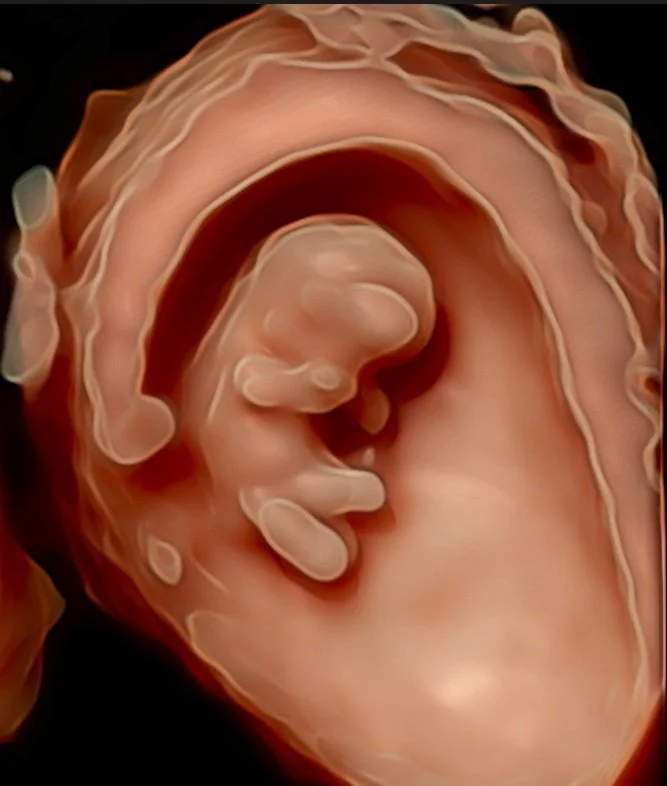
For most of pregnancy, the baby exists as a bump, a heartbeat on a monitor, or a series of kicks felt late at night. It’s an abstract kind of connection, one that can feel harder to grasp for partners who aren’t carrying the pregnancy. Advanced ultrasound imaging changes that. Seeing a recognisable face, a yawn, or tiny fingers stretching across the screen turns an abstract idea into something real, often for the first time.
This shift is a big part of why elective imaging, particularly 3D 4D ultrasound Perth WA services, has grown so quickly in popularity. But understanding how this technology actually works, and what it can (and can’t) offer, helps parents get the most out of the experience.
From 2D to 3D, 4D, and Beyond
Traditional 2D ultrasound remains the clinical standard for monitoring fetal growth and development, and for good reason. It’s fast, well-understood, and gives sonographers the cross-sectional views needed to assess anatomy accurately. But for parents, a 2D image can be difficult to interpret without training.
3D imaging renders those same sound waves into a static, sculpted-looking image, giving a much clearer sense of facial features. 4D imaging adds the element of time, showing movement in real time so parents can watch their baby blink, yawn, or suck a thumb as it happens. More recently, providers have started offering enhanced processing, sometimes marketed as 8K image enhancement, which sharpens surface detail even further using improved rendering techniques.
Each step in this progression serves the same underlying goal: making the image easier for parents to connect with emotionally, not just clinically.
Why Timing Affects Image Quality
One of the most common questions sonographers hear is when to book a scan for the clearest facial images. This isn’t arbitrary, it’s rooted in fetal development and the physical mechanics of imaging:
-
Too early (before 24 weeks): There’s less facial fat, and features can look less defined
-
The ideal window (26-32 weeks): There’s typically enough amniotic fluid around the face, and enough facial fat has developed for clearer, rounder features
-
Late pregnancy (30-36 weeks): Still possible, though the baby has less room to move and may be positioned less favourably
This is why many clinics offering an ultrasound package 20-28 weeks Perth also recommend a second, later scan if parents want an additional bonding opportunity closer to the birth.
The Role of the Sonographer in Advanced Imaging
Good equipment only tells half the story. A skilled sonographer knows how to angle the probe, apply appropriate pressure, and work with the baby’s position to capture the clearest possible image. They also understand normal variation in fetal presentation and can gently guide expectations, some positions simply won’t produce a clear facial image, no matter how advanced the equipment is.
This is an important distinction for parents to understand: elective 3D/4D/5D ultrasound Perth scans are non-diagnostic and designed for bonding, not for medical assessment. A qualified sonographer will always be transparent about this, offering reassurance without overstating what the scan can show.
What to Expect from a Bonding-Focused Scan
Parents attending an elective imaging appointment can generally expect:
-
A brief explanation of what the sonographer is looking for and how the scan works
-
Real-time viewing on a screen, often with the option for support people to attend
-
A chance to see the baby’s face, movements, and expressions in real time
-
Digital images or footage to keep afterward, often described as keepsake imaging
Many studios also offer package options combining 2D, 3D, and 4D views in a single pregnancy ultrasound Perth appointment, giving parents both the clinical clarity of a 2D scan and the emotional connection of 3D/4D imaging.
Setting Realistic Expectations
It’s worth noting that image clarity varies from pregnancy to pregnancy. Factors such as placental position, amniotic fluid levels, and maternal body type all influence results, and no clinic can guarantee a perfect facial image every time. Reputable providers, including studios like Amara Imaging, are typically upfront about this, offering guidance on timing and rescheduling rather than promising outcomes that depend on factors outside anyone’s control.
Key Takeaways
-
3D and 4D imaging build on standard 2D ultrasound to offer a clearer, more emotionally engaging view of the baby
-
Timing matters: scans between 26 and 32 weeks generally produce the clearest facial images
-
A skilled sonographer’s technique matters as much as the equipment itself
-
Elective imaging is non-diagnostic and designed for bonding, not medical assessment
-
Image quality varies by pregnancy, and reputable clinics like Amara Imaging set realistic expectations rather than guarantees
Advanced imaging hasn’t just changed what parents can see during pregnancy, it’s changed how early that sense of connection can begin. Understanding how the technology and the people behind it work together helps parents make the most of that moment.