

It began in a hospital waiting room where silence felt heavier than words and every passing minute seemed to stretch longer than it should. A close relative of mine sat beside me, holding a report that suggested a biopsy might be needed, and the anxiety in that moment was impossible to ignore. She whispered, “Why does finding answers always have to hurt this much,” and that question stayed with me long after we left that room.
At that time, I had only a basic understanding of what a biopsy meant, which usually involved invasive procedures, discomfort, and days filled with uncertainty while waiting for results. But somewhere along the way, I came across a concept that felt almost too good to be real, something called a virtual biopsy.
The First Time I Heard About Virtual Biopsy
I remember reading about it late at night, scrolling through articles that described how advanced imaging and artificial intelligence could analyze tissues without physically removing them. It sounded almost futuristic, like something that belonged in a science fiction story rather than modern healthcare, yet it was already being explored and implemented in real scenarios.
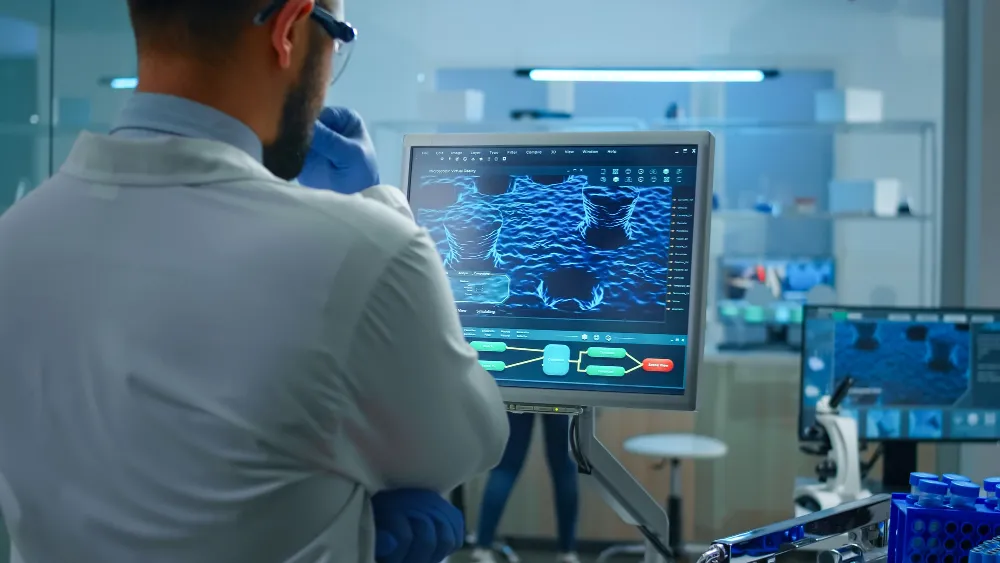
Virtual biopsy, in simple terms, uses imaging technologies such as MRI, CT scans, and AI-driven analysis to detect abnormalities and characterize tissues without invasive procedures.
Instead of extracting a physical sample, the technology interprets patterns, textures, and signals within the body to provide diagnostic insights that were previously only possible through surgical methods. That idea alone felt like a shift not just in technology, but in how we approach something as sensitive and critical as diagnosis.
A Market Reflecting a New Direction
While trying to understand how significant this innovation really was, I came across a market overview by Roots Analysis that provided a broader perspective.
It suggested that “The global virtual biopsy market size, valued at USD 0.78 billion in 2025, is projected to reach USD 0.85 billion in 2026 and USD 3.02 billion by 2035, representing a CAGR of 15% during the forecast period 2026 to 2035.”
Numbers like these are not just indicators of business growth, but reflections of how urgently the healthcare system is searching for safer, faster, and less invasive diagnostic solutions. It became clear that this was not just a technological experiment, but a meaningful evolution that could change patient experiences across the world.
The Human Side of Technology
What makes virtual biopsy truly impactful is not just its innovation, but the way it directly addresses one of the biggest fears associated with medical testing. For many patients, the idea of a biopsy brings anxiety about pain, complications, and the emotional toll of waiting for results after undergoing an invasive procedure.
Virtual biopsy offers a possibility where that fear is reduced, where diagnosis becomes less about endurance and more about understanding. Imagine being told that doctors can analyze a tumor or abnormal tissue without needing to cut into the body and instead rely on precise imaging and intelligent algorithms.
That shift alone can change how patients approach treatment decisions, because it removes a significant barrier that often delays early diagnosis.
Why This Feels Like a Turning Point
Traditional biopsies have been essential in medicine for decades, but they come with limitations such as sampling errors, procedural risks, and logistical challenges. Virtual biopsy, on the other hand, has the potential to analyze entire regions rather than small, extracted samples, which can lead to more comprehensive insights.
This means doctors can observe patterns across a larger area, track changes over time, and make decisions based on a broader understanding of the condition. It transforms diagnosis from a single moment into an ongoing process that evolves with the patient’s condition, which is a powerful shift in medical thinking.
The Role of Technology Behind the Scenes
Behind this innovation lies a combination of advanced imaging systems, machine learning models, and data analysis techniques that work together to interpret complex biological signals. These systems are trained to recognize patterns that may not be visible to the human eye, allowing for earlier detection and more accurate characterization of diseases.
However, with such advancements comes the responsibility to ensure that these tools are accurate, validated, and aligned with established medical standards.
As emphasized in quality evaluation frameworks for health-related information, accuracy and trustworthiness are critical because incorrect interpretations can directly impact patient outcomes.
Challenges That Still Need Attention
Despite its promise, virtual biopsy is still evolving and faces challenges related to clinical validation, regulatory approval, and integration into existing healthcare systems. Doctors and patients alike need confidence that these methods are reliable, which requires extensive research, trials, and real-world testing before widespread adoption.
There is also the question of accessibility, because advanced imaging technologies may not be available in all regions, limiting the reach of such innovations. Addressing these challenges will be essential to ensure that virtual biopsy becomes a standard option rather than a specialized solution available only in certain environments.
A Moment That Changed My Perspective
I remember going back to that same hospital months later for a follow-up visit, but this time the conversation felt different and slightly more hopeful. The doctor mentioned how newer diagnostic approaches were being explored that could reduce the need for invasive procedures in certain cases.
My relative smiled faintly and said, “If that becomes normal one day, it will change everything for people like me.” That sentence captured the essence of what virtual biopsy represents, not just a technological breakthrough, but a shift toward more humane and patient-friendly healthcare.
Where This Story Is Heading
Virtual biopsy is still writing its story, but the direction is clear and filled with possibilities that extend far beyond what we currently see. It represents a future where diagnosis is less about fear and more about clarity, where technology works quietly in the background to provide answers without adding to the patient’s burden.
And if the pace of innovation continues as it is today, the idea of diagnosing conditions without invasive procedures may soon feel not extraordinary but expected.
In the end, what began as a question in a waiting room has turned into something much larger, a glimpse into a future where medicine listens more carefully and intervenes more gently.