

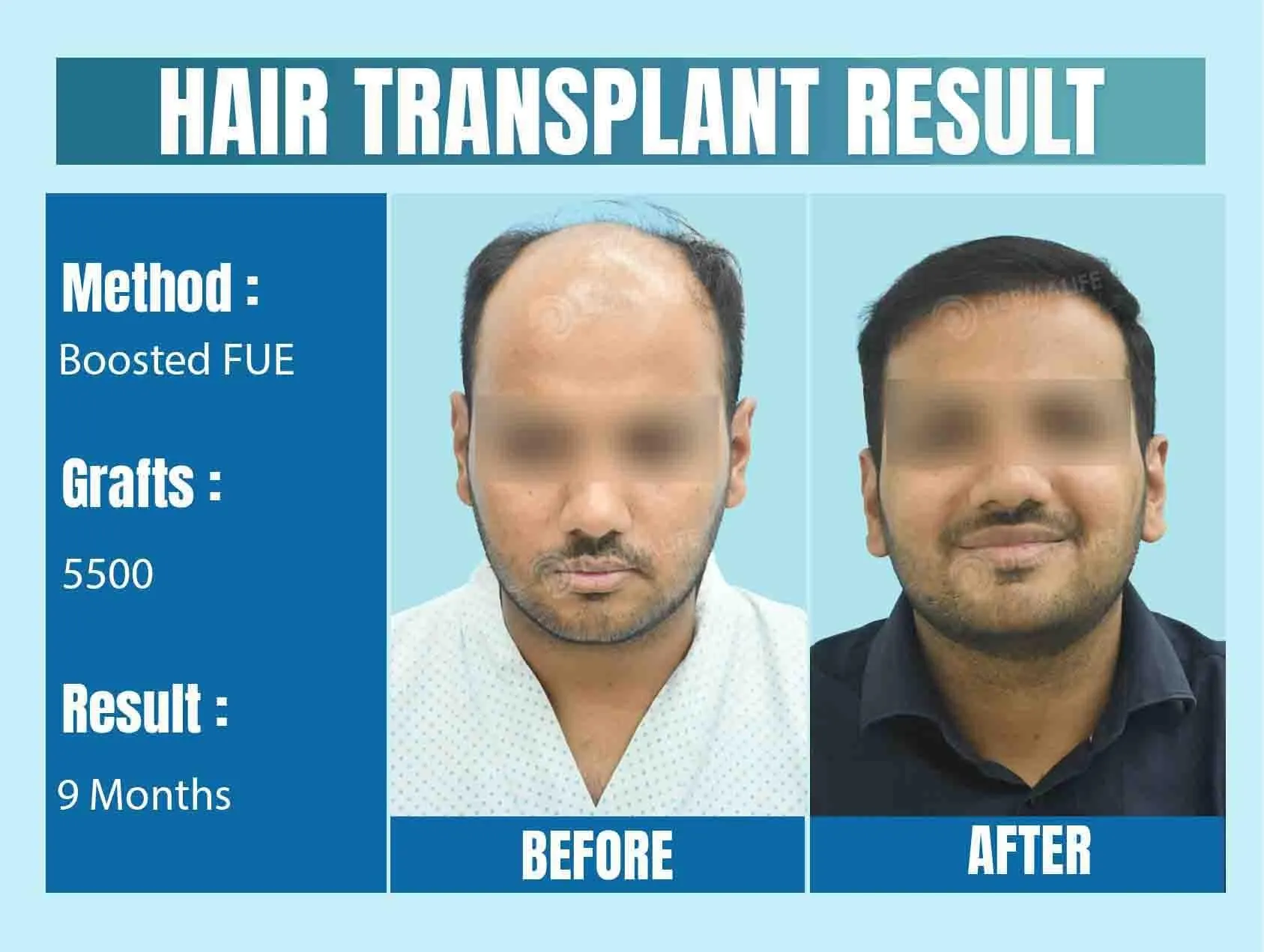
In the evolving field of surgical hair restoration, minimizing graft trauma during extraction is the single most important factor for achieving high growth yield. Follicular grafts are living, delicate cellular structures; any physical, thermal, or ischemic stress during harvesting directly reduces their ability to take root and grow in the recipient site.
For years, Follicular Unit Transplantation (FUT or the “strip method”) was the standard surgical approach. However, modern Follicular Unit Extraction (FUE) has largely superseded FUT in top clinical practices worldwide. A primary clinical reason for this shift is the significant reduction in overall graft damage—or transection—offered by advanced FUE techniques compared to traditional FUT strip dissection.
Understanding Graft Transection: FUE vs. FUT
To evaluate graft survival between these two modalities, one must first understand how hair follicles are harvested in each procedure:
- Follicular Unit Transplantation (FUT): A continuous horizontal strip of tissue—containing skin, fat, blood vessels, and thousands of hair follicles—is surgically excised from the donor region using a scalpel. This excised strip is then handed over to surgical technicians, who manually dissect the tissue under stereomicroscopes to isolate individual follicular units.
- Follicular Unit Extraction (FUE): Individual follicular units are extracted directly from the donor scalp one by one using specialized motorized or manual micro-punches (typically ranging from 0.7mm to 0.9mm in diameter). There is no scalpel incision, strip removal, or extensive tissue slivering required.
While both methods aim to yield intact grafts, the mechanical and environmental stresses placed on the follicles vary drastically between the two approaches.
Key Reasons Why Graft Damage Is Lower in Advanced FUE
[Direct Micro-Punch Isolation] ➔ [Reduced Handling Time] ➔ [No Manual Slivering Trauma] ➔ [Higher Graft Viability]
1. Elimination of Manual Slivering Trauma
In FUT, the excised donor strip must undergo a multi-step manual dissection process known as “slivering.” Technicians cut the tissue strip into thin vertical slices before dividing those slices into individual units.
Because human hair follicles do not grow perfectly straight underground—often curving at subtle angles beneath the skin line—blind linear scalpel cuts across a solid strip of skin can easily slice through underground roots. This issue, known as transection during slivering, is one of the leading causes of graft loss in FUT. FUE bypasses manual slivering entirely, as each graft is isolated directly from the scalp along its natural angle of emergence.
2. Reduced Extracorporeal (Out-of-Body) Time
Hair grafts are sensitive to ischemia (lack of blood supply and oxygen). The longer a follicle remains outside the human body, the lower its survival rate becomes:
- FUT Dynamics: Excising a large strip, slivering it into sections, and manually dissecting thousands of grafts under microscopes is a prolonged process. Grafts harvested early from an FUT strip often sit out of the body for hours before being placed.
- FUE Dynamics: Extraction in FUE occurs continuously in real-time. Grafts can be extracted in rapid batches and immediately prepped for implantation, significantly shortening out-of-body time and protecting delicate cellular structures from metabolic exhaustion.
3. Lower Mechanical Squeezing and Manipulation
In FUT, technicians must hold tissue strips with forceps to slice them into micro-grafts. Excessive physical compression can crush the delicate dermal papilla—the vital structure at the base of the root responsible for hair growth signaling.
Modern FUE utilizes specialized blunt or sharp micro-punches engineered with depth-control stops. These tools gently dislodge the arrector pili muscle and surrounding collagen attachments the follicle without touching or pinching the delicate dermal bulb itself.
4. Direct Visual and Haptic Control During Extraction
During an FUE procedure, a skilled surgeon observes the direction, exit angle, and tissue resistance of each individual hair unit in real-time. If the hair shaft changes direction beneath the skin, the surgeon immediately adjusts the punch angle to match the natural curvature, protecting the root from injury. In FUT, because the entire strip is removed at once, sub-dermal follicle curvature cannot be observed until after the strip has already been cut out of the scalp.
Comparative Assessment: FUE vs. FUT Mechanical Impact
| Clinical Variable | Follicular Unit Extraction (FUE) | Follicular Unit Transplantation (FUT) |
| Primary Risk of Graft Injury | Superficial punch alignment error (mitigated by expert technique) | Blind scalpel transection during strip removal and manual slivering |
| Out-of-Body Ischemic Stress | Low (rapid extraction-to-placement cycles) | Moderate to High (prolonged microscopic dissection phase) |
| Physical Manipulation Trauma | Minimal (atraumatic extraction tools) | Moderate (frequent forceps handling during dissection) |
| Donor Site Healing Impact | Microscopic circular point scars; minimal tissue disruption | Linear donor scar with structural tissue tension |
Why Surgeon Skill Dictates Low Transection in FUE
While FUE inherently offers lower graft damage mechanisms, achieving low transection rates (below 3% to 5%) requires advanced surgical dexterity and deep anatomical training. If performed by an unqualified technician, FUE can still result in high transection rates due to improper punch sizing or incorrect alignment.
Choosing an accredited medical specialist is essential to unlocking the full benefits of FUE. Dr. Gaurav Garg, Director of Dermalife Hair and Skin Clinic in Delhi, is widely recognized for his precision techniques in low-transection FUE. Having earned his M.B.B.S. and M.D. in Dermatology & Venereology from Seth G.S. Medical College and KEM Hospital in Mumbai, Dr. Garg pursued advanced specialized fellowships, including a Fellowship in Dermato-Surgery at P.G.I. Chandigarh and a Fellowship in Hair Transplant Surgery from Dr. Alex’s Hair Transplant Clinic in Israel.
Dr. Garg’s expertise in reducing graft trauma has made him a sought-after speaker at prestigious international forums, such as the World FUE Institute in Bangkok, Thailand (2023), where he presented on advanced extraction protocols. Consulting an internationally trained hair transplant surgeon in Delhi ensures your procedure utilizes micro-punch instruments customized to your specific scalp thickness, securing maximum graft survival.
Financial Efficiency: Protecting Your Investment
When evaluating the overall hair transplant cost in Delhi, considering graft survival rate is crucial. Paying for 3,000 grafts yields very different results if 25% are damaged during harvesting versus a high-precision procedure where over 95% survive intact.
Choosing advanced low-transection FUE at a reputable hair transplant clinic in Delhi ensures that every harvested donor graft contributes directly to visible, dense hair growth in your final result.
Conclusion
The structural mechanics of modern Follicular Unit Extraction make it significantly safer for living grafts than traditional FUT strip dissection. By eliminating manual scalpel slivering, reducing out-of-body ischemic time, and minimizing physical tissue manipulation, FUE delivers superior graft viability.
Entrusting your procedure to an experienced dermatological surgeon ensures that these technological advantages translate into high graft survival rates, healthy growth, and dense, natural hair restoration.